
Best neighborhoods in Findlay for older homes needing rewiring
South Main, Riverside, and the West Park blocks hold most of Findlay's pre-1950 housing stock - and most of the wiring that needs replacing before winter.
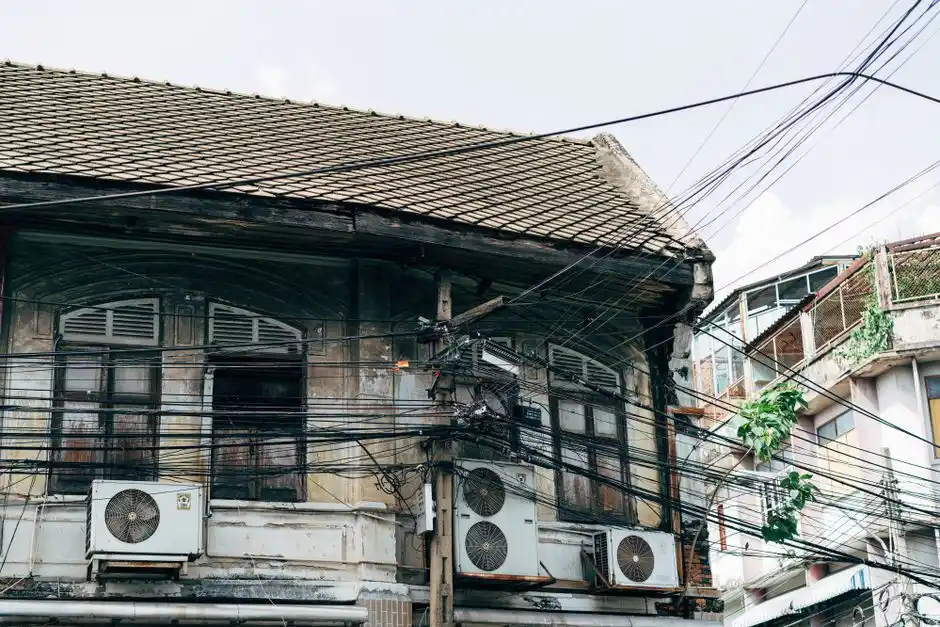
The neighborhoods with the highest concentration of homes needing rewiring in Findlay are South Main, the West Park blocks, Riverside, and the East Sandusky corridor - anywhere the housing stock was built before 1950 and still runs on two-wire, ungrounded circuits. If your house sits in one of those blocks and still has cloth-wrapped wire or a 60-amp fuse box, you are looking at a rewire, not a repair.
We have pulled old wiring out of all of them. What follows is a street-level look at which Findlay neighborhoods carry the most risk, what the work involves, and what it costs here in 2026.
Why Findlay's older neighborhoods need rewiring first
Findlay's pre-war housing stock was wired for lighting and maybe a refrigerator, not for the loads a modern household puts on a circuit. A 1920s house on South Main was built with 30-amp service and knob-and-tube wiring running through floor joists. Add a window air conditioner, a microwave, a chest freezer, and two space heaters, and that original circuit is carrying four times what it was designed for.
Electrical rewiring in Findlay, Ohio is the process of replacing that original wiring, boxes, and devices with modern grounded cable rated for today's loads. It is not a patch job. When we rewire a house, we pull new 12-gauge and 14-gauge NM-B cable through the walls, install grounded receptacles, and bring the panel up to code.
The neighborhoods below share three traits: pre-1950 construction, original two-wire circuits, and a lot of homeowners who have added load over the decades without upgrading the wire behind the walls.
South Main and the West Park blocks
South Main Street and the streets feeding into West Park hold the densest cluster of 1890-1935 homes in the city, and most of them still have some knob-and-tube in the attic and second-floor ceilings. That wiring has no ground conductor. It was never meant to carry a modern load, and the insulation on it turns brittle after 80 or 90 years.
We see two patterns here. The first is a partial rewire done in the 1980s or 1990s that replaced the first-floor circuits but left the upstairs and attic untouched. The second is a full original system with a 60-amp fuse panel in the basement. Both need work. The partial rewire is usually the more dangerous of the two because it hides the problem - the new panel makes the house look updated while the old wire still feeds half the bedrooms.
If you own one of these homes, the practical first step is a full circuit map. We trace every outlet, switch, and fixture back to its breaker and label what is original and what is not. From there we can quote a whole house rewiring Findlay OH project or a targeted replacement of just the unsafe runs.
Riverside and East Sandusky Street
The Riverside area and the East Sandusky corridor are a mix of 1920s bungalows and post-war capes, and the wiring reflects that split. The bungalows typically have knob-and-tube with a fuse box. The capes, built in the late 1940s and 1950s, have early rubber-insulated cable that is now past its service life.
Rubber insulation from that era dries out and crumbles. You find it by pulling a receptacle out of the wall and looking at the wire - if the insulation cracks when you bend it, the whole run is suspect. We replace those circuits with modern cable and install GFCI protection in the kitchen, bath, and any outlet within six feet of a water source.
Homeowners in this part of town also tend to be adding load - EV chargers, hot tubs, workshop tools in the garage. That is where a panel upgrade Findlay OH becomes part of the conversation. A 100-amp panel that was fine in 1995 will not carry a Level 2 charger and an electric range at the same time.
The Blanchard Valley and Sixth Street corridor
The Sixth Street corridor and the blocks closer to Blanchard Valley include some of the oldest continuously occupied houses in Findlay, and a fair number of them have been converted from single-family to multi-unit or back again. Conversions leave behind a mess of spliced circuits, shared neutrals, and unlabeled breakers.
We treat these as diagnostic-first jobs. Before we quote a rewire, we spend an hour or two mapping the existing system and identifying what is safe to keep. In a converted duplex, that often means separating the two units onto their own circuits and adding a subpanel Installation Findlay OH so each side has its own disconnect.
One thing we tell every owner in this corridor: do not let a home inspector's "functional at time of inspection" note talk you out of a real evaluation. An inspector checks whether the outlet works. They do not pull the panel cover, and they do not test the wire insulation.
What rewiring actually costs in Findlay in 2026
Typical 2026 pricing in this area runs $3,500 to $6,000 for a partial rewire of the main living areas, and $9,000 to $18,000 for a full house rewire depending on square footage, attic and basement access, and how much plaster we have to open and patch.
A few line items we quote most often:
- Full rewire, 1,200-1,800 sq ft house: $9,500-$14,000
- Full rewire, 2,000-2,800 sq ft house: $14,000-$18,500
- Panel upgrade from 60-amp to 200-amp service: $2,200-$3,800
- Adding a dedicated circuit for a dryer, range, or EV charger: $450-$1,100
- Whole-house surge protection added during a rewire: $300-$600
Plaster walls add cost because we patch and you repaint. Unfinished basements and walk-up attics save money because we can run cable without opening ceilings. If your house has a finished basement with a drywall ceiling, expect the higher end of the range.
We give you the number before we start, and it does not change unless we open a wall and find something nobody could have seen.
How do you know if your Findlay home needs rewiring?
You need rewiring if your Findlay home still has knob-and-tube or aluminum branch wiring, a 60-amp fuse panel, ungrounded three-prong outlets, or cloth-insulated cable that crumbles when it bends. Any one of those is enough to justify an evaluation.
The warning signs homeowners actually notice are more mundane. Breakers that trip when the microwave and toaster run together. Lights that dim when the furnace kicks on. A faint burning smell near an outlet. Warm switch plates. Flickering on a circuit that has not changed in years.
Two of those together usually means the circuit is overloaded or the connections are failing. Either way, the fix is not a bigger breaker. Oversizing a breaker on undersized wire is how house fires start.
What to watch out for before you hire anyone
The most common mistake we see is a homeowner who hires the lowest bid and gets a partial job that leaves the original wire in the walls. If the quote does not include a circuit map and a written scope of what is being replaced, you do not know what you are buying.
Other things to watch:
- A contractor who replaces the panel but leaves knob-and-tube on the branch circuits
- Quotes that do not mention permits - Findlay requires them for panel changes and new service
- Anyone who suggests a larger breaker to stop nuisance trips
- No GFCI protection added in kitchen, bath, garage, or exterior outlets
- Work done without a final inspection
Ask for the license, ask who pulls the permit, and ask what happens if the inspection fails. A legitimate electrician answers all three without hesitating.
When to call a professional
Call us when you are not sure what is behind the walls. We can tell you in one visit whether you need a full rewire, a partial one, or just a panel upgrade - and we will show you what we found rather than hand you a vague estimate.
If you are buying an older home in one of these neighborhoods, get us in before you close. A $300 evaluation is a lot cheaper than discovering you need a $14,000 rewire two weeks after you get the keys.
Circuit & Rewiring Pros works across Findlay and the surrounding county. We handle new circuit installation, full rewires, panel upgrades, and everything in between.
Frequently Asked Questions
How long does a full house rewire take in Findlay?
Most 1,500-2,000 sq ft homes take 4 to 7 working days. Larger homes with plaster walls and finished basements run 8 to 12 days. We usually have power back on every evening, with only brief daytime outages for panel work.
Can I live in my house during a rewire?
Yes. We work room by room and keep at least one bathroom and the kitchen powered. You will deal with some dust and a few hours of downtime on panel day, but you do not need to move out.
Does homeowners insurance care about old wiring?
Many carriers now ask about knob-and-tube and 60-amp service during underwriting. Some will non-renew a policy on a house with ungrounded circuits. A documented rewire usually resolves the issue and can lower your premium.
Is a partial rewire worth it, or should I do the whole house?
Partial rewires make sense when the original wiring is confined to one area - an attic, a converted porch, a single bedroom wing. If knob-and-tube runs through the main living space and bedrooms, a full rewire is the better long-term spend.
Do you pull the permit and handle inspection?
We pull the permit and schedule the inspection as part of the job. You get the signed-off inspection report when we are done, which matters when you sell the house.
Get help with New Circuit Installation & Rewiring in Findlay
If your house is in one of these neighborhoods and you are not sure what is behind the walls, call us. We will map the circuits, show you what we find, and quote the work before we start.
Call Circuit & Rewiring Pros at +14197996088 to schedule your evaluation.